Friday, April 19, 2019

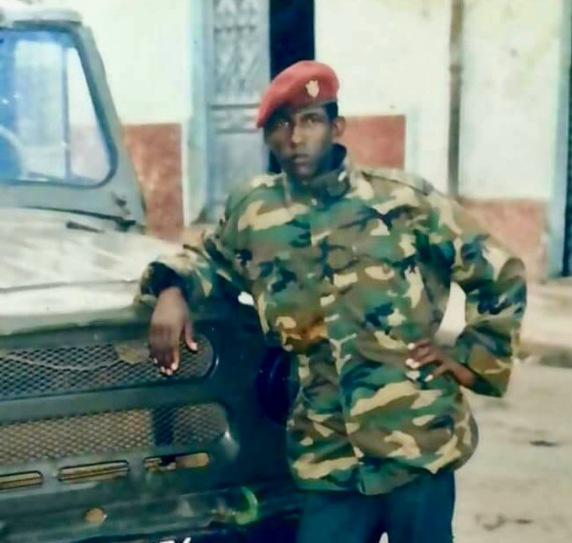
Obang will give talk about his extensive travel in Ethiopia, and his assessment of the country's transformation/regression towards better future. Please join us for an informed discussion on this topic and support Obang's voice of reason
Image may contain: 1 person, text

Monday, April 1, 2019

Press Release


Press Release regarding the Gross Human Rights Violations
Targeting Renowned Journalist Eskindir Nega and Colleagues

On March 30, 2019, the Ethiopian police banned Mr. Eskindir Nega and his colleagues from holding a press conference at the Ras Hotel for the recently formed Council of Concerned Ethiopians to Protect the Rights of Residents of the City of Addis Ababa.
Members oh UHD and particularly, Ethiopian Asylum seekers, in Toronto and surrounding area discussed the ban and expressed their concern with the government’s extreme reaction to Eskinder’s and the Council’s peaceful and lawful activities. At the end of the meeting, the participants issued a four-point declaration:
1. Every Ethiopian has freedom of expression and assembly that includes advocating for and organizing for a legitimate cause and engaging in activities to advance such a cause by peaceful means. By establishing the council to advocate for the rights and interests of the residents of Addis Ababa, Eskindir and colleagues were only exercising their right to freedom of assembly and association as enshrined in Article 30 and 31 of the Ethiopian constitution and other international conventions, including the Universal Declaration of Human Rights.

2. The ongoing acts of intimidation and harassment, including Prime Minister Abiy Ahmed’s recent statement using the rhetoric of war against Eskindir Nega and colleagues for establishing the Council of Concerned People for Addis Ababa, are unjustified and represent an outright attack on freedom of expression and assembly.
3. The recent ban of the press conference is a violation of Eskinder Nega’s freedom of expression, and a violation of the freedom of assembly of the Council established to protect the rights of the residents of Addis Ababa.

4. The government must cease its threats and illegal prohibiting of Eskinder and his colleagues from reaching out to Ethiopians and the residents of Addis Ababa through the mass media, and its prohibiting of Addis Ababa residents from exercising their right to freedom of assembly by establishing the Council and its branches in various part of the city.


We call upon the government of Canada, the international community and human rights organizations, including the United Nations, African Union, European Union, Human Rights Watch, Amnesty International and Freedom House to denounce in clear terms the Ethiopian government’s violation of its citizens’ freedom of expression and assembly.

Unity for human rights and democracy Toronto
March 30, 2019

Wednesday, February 27, 2019

Managing Ethiopia’s Unsettled Transition Ethiopia’s charismatic new prime minister, Abiy Ahmed, has generated great excitement with initiatives breaking with the past. But he faces challenges as formidable as his promises are bold: he urgently needs to halt communal strife, smooth the road to elections and boost the ailing economy.


Related image
Executive Summary After four years of street protests, the ruling Ethiopian People’s Revolutionary Democratic Front (EPRDF) elected Abiy Ahmed Ali prime minister on 2 April 2018. For many Ethiopians Abiy is a breath of fresh air. He admits the ruling coalition’s shortcomings, pledges reform, preaches unity and has made peace with Ethiopia’s old foe, Eritrea. Yet if Abiy has raised enormous expectations, he also faces daunting challenges. Insecurity has intensified and proliferated across the country, with communal violence tearing at the multi-ethnic fabric of Ethiopian society. Regional leaders demand more power. The economy is on life support, with foreign debt in excess of $24 billion, many young people without jobs and an old guard resistant to reform. There are no easy fixes for these challenges, but Abiy can give himself the best odds by focusing on three priorities – working to stop communal conflict, preparing for 2020 elections and reforming the dangerously weak economy. The crisis that led to Abiy’s assumption of power was years in the making. Protests broke out in 2014 over discrimination against the Oromo – the country’s largest ethnic group – and spread to other groups, especially the Amhara, its second largest. Discontent with tough socio-economic conditions, as well as with the ruling party’s 27 years in power and its domination by a small, mostly Tigrayan, elite, was already widespread. The EPRDF, weakened by factional quarrels after the August 2012 death of strongman Prime Minister Meles Zenawi, struggled to contain the unrest. Meles’s successor, Hailemariam Desalegn, veered from cabinet reshuffles and political prisoner releases to crackdowns including new arrests of opposition leaders and demonstrators. In October 2016, a state of emergency brought temporary calm, but the protesters’ demands for political reform and socio-economic improvements still largely went unmet. On 15 February 2018, Hailemariam resigned. By then the EPRDF elite – and especially its Tigrayan component – had lost its grip. With power dispersed among the security sector’s upper echelons, who were divided over whether to reform or protect the status quo, the EPRDF proved unable to steer the battle for succession. The Oromo People’s Democratic Organization, one member of the EPRDF coalition, stepped most assertively into the breach. Backed – in a break from tradition – by the Amhara National Democratic Movement, another EPRDF party, it propelled the Oromo nominee, Abiy Ahmed Ali, into the premiership. At age 42, Abiy is considerably younger than the old guard and, with the sympathy of many protesters, he appears well suited to the task of assuaging the grievances of the country’s neglected groups

https://d2071andvip0wj.cloudfront.net/269%20Managing%20Ethiopia%20-%20Print.pdf

Saturday, July 14, 2018

Semayawi Party president Mr. Yeshwas Aseffa will have a discussion forum on current Ethiopian political situation . You are all invited

“We are Like the Dead” Torture and other Human Rights Abuses in Jail Ogaden, Somali Regional State, Ethiopia


  Summary
Jail Ogden is unthinkable. From the moment you are put there until the moment you are released, you do not know if you are alive or dead. You are tortured and humiliated day and night, you are starved, [and] you can’t sleep because there’s so many people.
—42-year-old Mohamed who spent five years without charge in Jail Ogaden, August 2017
In the heart of the eastern city of Jijiga, just five minutes from the University, lies one of the most notorious detention centers in Ethiopia. Jail Ogaden, officially known as Jijiga Central Prison, is home to thousands of prisoners, who are brutalized and neglected. Many have never been charged or convicted of any crime.

Interview: Years of Untold Suffering at Jail Ogahttps:
In the Somali region of Ethiopia, it seems like everyone knows someone who was locked up in the dreaded Jail Ogaden, but no one wants to speak about the horrors there. Audrey Wabwire speaks to Felix Horne about the new Human Rights Watch report on Jail Ogaden, and about what it takes to restore hope to many who have silently suffered in the Somali region and across Ethiopia.
Former prisoners described a horrific reality of constant abuse and torture, with no access to adequate medical care, family, lawyers, or even, at times, food. Officials stripped naked and beat prisoners and forced them to perform humiliating acts in front of the entire prison population, as punishment and to instill shame and fear. In overcrowded cells, head prisoners, called kabbas, beat and harassed prisoners at night during interrogations, passing notes on to prison leaders who then chose some for further punishment. The purpose of the torture and humiliation was to coerce prisoners to “confess” to membership in the Ogaden National Liberation Front (ONLF), a banned opposition group.
This report, based on almost 100 interviews, including 70 former prisoners of Jail Ogaden, documents torture and other serious abuses, including rape, long term arbitrary detention, and horrific detention conditions in Jail Ogaden in Ethiopia’s Somali Regional State (Somali Region) between 2011 and early 2018. Interviewees also included government officials and members of Somali Region security.

follow the link for full detail https://www.hrw.org/report/2018/07/04/we-are-dead/torture-and-other-human-rights-abuses-jail-ogaden-somali-regional

https://www.youtube.com/watch?v=hlvuRq9CJzs&feature=youtu.be 

Tuesday, May 1, 2018

Ethiopian opposition labels Johannesburg death a government assassination

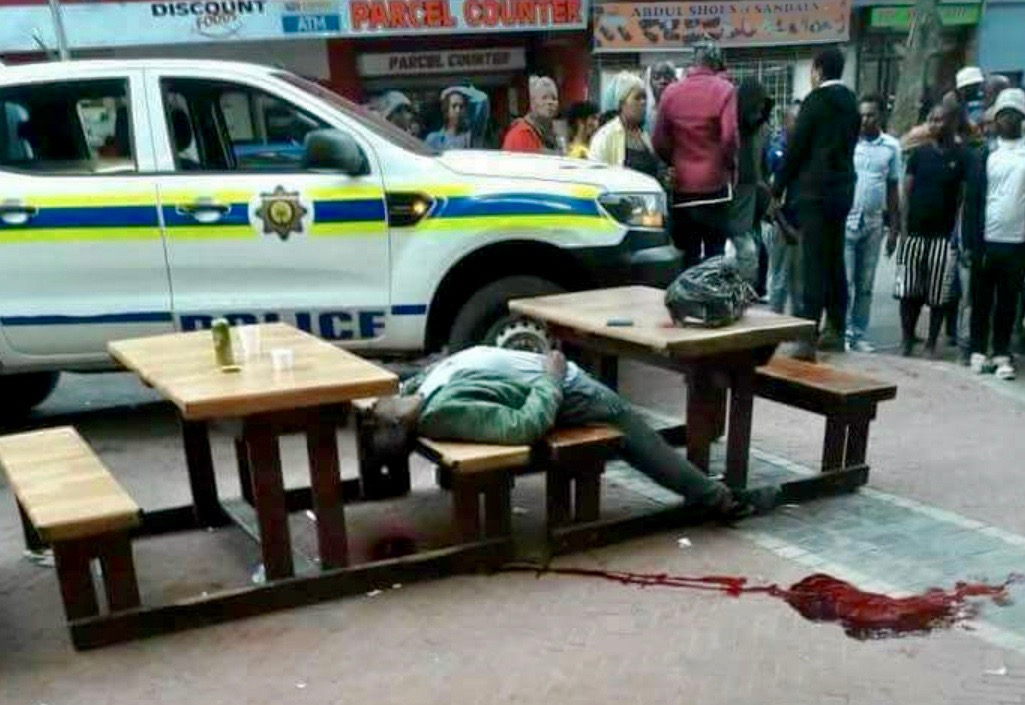
On Saturday 21 April Gezahegn Gebremeskel was shot down in cold blood in Johannesburg. The Ethiopian community lays responsibility for the death of Gezahegn at the door of the Ethiopian government.
A spokesman for the community said Gezahegn had protested outside a meeting at the Ethiopian embassy of a South Korean delegation the day before. He had been hustled outside and threatened with death.  A day later he was gunned down. The community say this is not the first time such threats have been issued.
Below is an opposition account of what happened.
Gezahegn Gebremeskel
Source: ESAT News (April 23, 2018)
Gezahegn Gebremeskel, known in the community as Gezahegn Nebro, was shot and killed in a cold blooded murder on Saturday, sending shock waves to Ethiopians across the globe.
The news and photos of his dead body quickly spread on social media with condolences pouring in from Ethiopians from all corners of the world.
Nebro was at the Ethiopian Embassy in Johannesburg on Friday, a day before his Gezahegn Gebremeskelassassination, protesting a meeting held by Tigrayans and supporters of the minority ethnic regime in Addis Ababa.
Friends of Nebro told ESAT that staff at the Embassy had threatened to kill Nebro if he does not stop his activism.
The Ethiopian Embassy has been mum on the issue. It has not expressed concern over the killing of its citizen, nor has it denied the allegations.
Nebro escaped an assassination attempt in 2012.
The former airborne with the Ethiopian army was well known in the community and has been instrumental in bringing together the Ethiopian community to stand up against tyranny back in his country.
It was learnt that the assailant shot Nebro at close range and fled the scene.
Community leaders told ESAT that they are hiring independent investigators to find Nebro’s killers and their accomplices.

Hired guns are not unusual in Johannesburg, a city with one of the highest rates of gun violence and murder.
source

Tuesday, February 20, 2018

Nigist Yirga / አክቲቪስት ንግስት ይርጋ የእስር ቤት ስቃይ በአኒሜሽን ቪዲዮ


ኢሰመፕ በእስረኞች ላይ የሚደርሰውን የመብት ጥሰት የመሰነድ ፕሮጅክቱን መሰረት አድርጎ የሚከተለውን በአክቲቪስት ንግስት ይርጋን የእስር ቤት ስቃይ በአኒሜሽን ቪዲዮ አዘጋጅቶ አቅርቦላችኋል፡፡ ይመልከቱ! ያጋሩ ! ለወዳጅ ዘመድ ጓደኛ ያሳዩ!

Sunday, January 14, 2018

Ethiopian and Eritrean Refugees Celebrate New Year eve in Toronto

                         
                                       They paid tribute to the families of political prisoners  

Ethiopian and Eritrean in Toronto, Canada, have gathered to celebrate new year together at Hirut Restaurant, in Toronto on December 31st, 2017. The event is organized by Unity for Human Rights and Democracy (UHRD), a Toronto-based not for profit organization. The program commenced with a moment of silence in remembrance of the victims of political killings in Ethiopia and Eritrea.  

The organizers of the event stated that the program is mainly about celebrating the resilience of refugees to get to Canada passing through several hurdles and their accomplishments in the year 2017. The organizers also stated that creating the platform for the refugees from the two communities to welcoming the new year with new hope and optimism is the second objective of the event. In this regard, the UHRD reported that it was able to provide regular monthly financial assistance to 6 families of political prisoners in Ethiopia during 2017. It expressed its hope with growing support of the community that it intends to increase its support. Unity noted the ever increasing number of political prisoners in Ethiopia. Particularly, following the declaration of state of emergency in Ethiopia in October 2016, more than 25,000 people were arrested, and currently more than 5,000 of these individuals are believed to be held in detention. The families of these people are suffering from the absence of their loved ones and impoverished due to the loss of breadwinners of the family. In light of this, the organizer noted that there is a need to scale up the support to families of political prisoners.  
 Further, the organizers announced that they will endorse new initiative of the Solidarity Movement for New Ethiopia (SMNE). This initiative will aim to bring Ethiopians more closer in search of common values and goals. The message of the SMNE Executive Director, Obang Metho, was delivered at the event, and fundraising event for the support of this initiative was held.  
The event featured the performance of Toronto-based Ethiopian artists. They electrified the hall and moved the audience with their excellent performance. The organizers thanked these artists who volunteered their time and talent for free in the most expensive night of the year. The artists expressed that donating their time and talent is the least they could do in assisting the struggle for freedom in Ethiopia. The audience dinned on traditional Habesha and European cousin prepared by volunteers. The program was successful in raising funds for the families of political prisoner in Ethiopia, SMNE new initiative and fostering social and cultural solidarity between Habsesha community in Toronto. The night was concluded with a wish to organize a bigger event for the next new year eve.  

Tuesday, December 12, 2017

Ethiopian government used spyware against dissidents: report


http://www.cbc.ca/radio/popup/audio/listen.html?autoPlay=true&mediaIds=1114847299596


In October 2016 at the Irreecha religious festival in Bishoftu, Ethiopia, at least 55 people were killed in a stampede after police fired tear gas into the crowds. 
The deaths sparked nationwide protests and within days, a different kind of countermeasure got underway: cyberattacks.
The government was very nervous, the population was angry. So it was this time that they tried to hack me.'-  Oromo activist Jawar Mohammed
Given the work activist Jawar Mohammed does with the Oromia Media Network (OMN) and his profile online, he figured he'd be an obvious target, but it was how he was targeted that surprised him.
"When this suspicious email came, I did not open it. I passed it to our IT department. They looked at it, and they suspected it might be spyware," he tells The Current's Anna Maria Tremonti
"We in the media were providing the domestic and international community with updated information from every village. So the situation was extremely intense. The government was very nervous, the population was angry. So it was this time that they tried to hack me."
AFP_GQ90A
Residents of Bishoftu crossed their wrists above their heads as a symbol for the Oromo anti-government protesting movement during the Oromo new year holiday Irreechaa in Bishoftu, October 2, 2016. (Zacharias Abubeker/AFP/Getty Images)
Even before the protests, Mohammed says the government was using different hackers from Russia and China to get into his email and attack OMN's website. 

What made the email suspicious?
Mohammed says the email looked like it came from people he knew. There was also a link provided and when clicked, prompted an Adobe software download.
"That was quite strange so I stopped there and contacted our IT people," he says.
Then the University of Toronto's Citizen Lab that studies surveillance and content filtering on the internet was contacted to investigate this email.  
Computer search engine
Bill Marczak at the University of Toronto's Citizen Lab says rules and oversight regarding lawful intercept are lacking. (Getty Images)
Bill Marczak, senior research fellow at the facility, says upon looking at Mohammed's email, a link that looked like it was going to a website called EastAfro.com, which is an Eritrean online video portal, was not what it seemed.
"When we looked at the link, it actually appeared that someone had registered a website to look like EastAfro.com which was called EastAfro.net. So it was a lookalike website which was our immediate clue that something was suspicious," Marczak tells Tremonti.
A virtual machine in the lab determined that when the link in Mohammed's email was clicked and the software downloaded and installed, "it would have started sending information from the computer back to a server on the internet which is a telltale sign of spyware," Marczak says.
 
Is this illegal?
While it's typically illegal for a private individual to use spyware against someone else, Marczak says when it's a government following this procedure, they can often use local law as a defence.
"But the problem is that governments like Ethiopia and other places, the rules and oversight regarding lawful intercept are lacking," he says.
'We found an IP address traced to Ethiopia.'- Bill Marczak
Marczak says the lab was able to trace a sample of the spyware from Mohammed's email to a fake Adobe Flash update used by computer security researchers who investigate suspicious files.
"We noticed the second sample was signed by this company Cyberbit. And from there we looked at its website and found out that this is the company that claims to sell exclusively to governments," he explains.
The spyware was traced to Ethiopia because the server attached to it had a publicly accessible log file, according to Marczak.
"This is not typically something that you want to have on your spyware server if you're running a secret operation," Marczak says, adding that the company probably forgot that this feature existed.
"The log file showed who was logging in to check the results of the spyware. In other words, who was logging in to download the data that was being uploaded by infected computers, and we found an IP address traced to Ethiopia."
The Current did contact Canada's privacy commissioner, Daniel Therrien, for comment on this story. A spokesperson replied that online surveillance by foreign governments is outside the commission's jurisdiction, and directed The Current's producers to Global Affairs. We contacted that department, but no one got back to us. 
The Current also contacted the Ethiopian embassy in Ottawa. A spokeswoman there said no one was available to speak to this issue today. 

Listen to the full conversation above — including Dmitri Vitaliev, co-founder and director of eQualit.ie, a Montreal-based nonprofit that provides support, training, and digital protection for journalists activists and civil society workers worldwide.

This segment was produced by The Current's John Chipman and Susana Ferriera.

Wednesday, December 6, 2017

Champing at the Cyberbit Ethiopian Dissidents Targeted with New Commercial Spy ware

Champing at the Cyberbit Ethiopian Dissidents Targeted with New Commercial Spyware


Thursday, October 26, 2017

Wednesday, September 20, 2017


               The story of Yonatan Tesfaye, a political activist in prison for his FB posts.
                   Source Ethiopian Human Rights Project     http://ehrp.org/


Tuesday, September 19, 2017

Tuesday, September 12, 2017


Former MP said Ethiopian Government is Inviting revolution into the country

The former MP, Mr. Girma Seifu Maru, made the above statement at a public meeting organized by Unity for Human Rights and Democracy, a Toronto-Based advocacy group, and at Hiruth restaurant in Toronto, Ontario, Canada on the weekend. Answering questions raised by participants of the meeting, Mr. Girma said the government of Ethiopia has no option but to resolve all conflicts with open heart in am amicable way. Mr. Girma said “if this country had to be transformed by a means other than violence, the government should open the door for discussion. Otherwise, the Ethiopian people have said no and public wave of protest could resolve the issues.”
 

The former sole opposition member of parliament, Mr. Girma came to Toronto last week to introduce his recently published book, “Yetekeberut” and meet Ethiopians in Toronto and surrounding regions. Mr. Girma’s book was on display at the Ethiopian Day ceremony held on September 9, 2017 at Christie Pits’ Park in Toronto where thousands of Ethiopians came out and celebrated in unison to celebrate the Ethiopian New Year. Mr. Girma was seen signing his new book for patrons. The book talks about Mr. Girma’s experience in the Ethiopian parliament also known as House of Representative, from 2010 till 2015, and it was published last month in Washington, DC. 


The panel discussion initially focused on Mr. Girma’s book and experience in the Ethiopian parliament. However, several issues were raised during the discussion including the current political turmoil in Ethiopia, the hopes and challenges to bring democratic changes in Ethiopia, and the things his colleagues and compatriots are doing in Ethiopia. The role of the diaspora was also discussed and Mr. Girma addressed them all. The former MP concluded his statement by saying things could get out of hand the country could lead into chaotic situation unless the government takes the lead and makes concessions. An excerpt was read from Mr. Girma’s book during the panel discussion.

Several Ethiopians attended the meeting that was held on the Ethiopian new year.

Unity for Human Rights and Democracy takes this opportunity to say Happy New Year to all Ethiopians in Ethiopia and around the world.. Unity wishes the New Year to be a year of peace, reconciliation and solidarity. Unity calls upon the government of Ethiopia to act responsibly, release all political prisoners, stop using excessive force to quell protests, and allow opponents the right to protest and organize in a peaceful manner. In short  "Respect the Constitution"

                                                    melkam Addis Amet

Wednesday, July 19, 2017

“What they did on me is the worst. I experienced all the unspeakable rogue things at Maekelawi” Activist Nigist Yirga

Name: – Nigist Yirga Tefera
Age: – 24 years old
Address: – Amhara Regional State, Gonder town Kebele 18
Current situation: – Jailed in Kality prison
The reason why I am jailed: – For participating in peaceful public protests in Gondar of Amhara regional state.
Prosecutor’s official charge against me:- Federal prosecutor charged me and five others with terrorism. Prosecutor indicated in the charge that I was responsible for organizing and leading the Amhara protests in north Gondar having involved in terrorist organizations. Being the 1st defendant among other five on terrorism (Violation of ATP, article 3/4/6) charges brought on me; I am now attending court hearings at the 4th criminal bench of the federal high court Lideta branch.
The following rights violations are committed against me in prison:–
1. I was imprisoned in dark and cold room in Maekelawi for days.
2. My families did not know my whereabouts for days
3. I was detained incommunicado for weeks and I am still detained far away from my home town.
4. I used to be called for interrogations at nights.
5. I was harassed, threatened and insulted because of my ethnicity and sex.
6. They made me stand naked in front of male interrogators and mock on my body. They made me bitterly hate the fact that I am born a woman.
7. My suffering during the interrogations includes pulling out of my finger nails.
8. Hair pulling and other similar tortures has also been my day to day experience
9. I am now in Kality prison since prosecutor officially charged me. But the rights violations have not yet stopped here too. Anyone who would like to visit me at Kality is not allowed except fewer people on name list that are available at the prison administrator’s hands. I can only be visited for 30 minutes from 12:00 am to 12:30 am.
I was born in Gondar. I went to school there in Gondar. I have seen the human rights violations and sufferings committed against prisoners at Kality and Qilinto when I came to Addis Ababa to visit relatives and also visit these prisoners who are from Gondar remote areas. I was very touched by what I have seen which I think to stand and speak for these people’s rights is what is expected from me.
Accordingly, I started to participate in public protests to demand the respect of rights. I participated at the July 2016 public protest held in Gondar following the accusation of Colonel Demeke Zewdu, founder of the “Wolkayite Amhara Identity Question Committee”, with murder and terrorism. Wearing a T-shirt with a slogan ‘The Amhara People are not Terrorists!’ I was at the forefront at the demo exercising my constitutionally guaranteed rights of participating at peaceful demonstration.
It is for such peaceful activities that I was kidnapped by the federal police and government security people and thrown to jail in September 2016.
http://ehrp.org/